Can AI Detectors Be Wrong? False Positives, Explained Honestly
Yes — AI detectors can absolutely be wrong. Learn what false positives are, why your own writing gets flagged, and the fair way to handle a disputed result.
Can AI Detectors Be Wrong? False Positives, Explained Honestly
Let's start with the uncomfortable truth, because you deserve it straight:
Yes. AI detectors can be wrong. They are wrong regularly. And anyone selling you a detector that claims otherwise is selling you something.
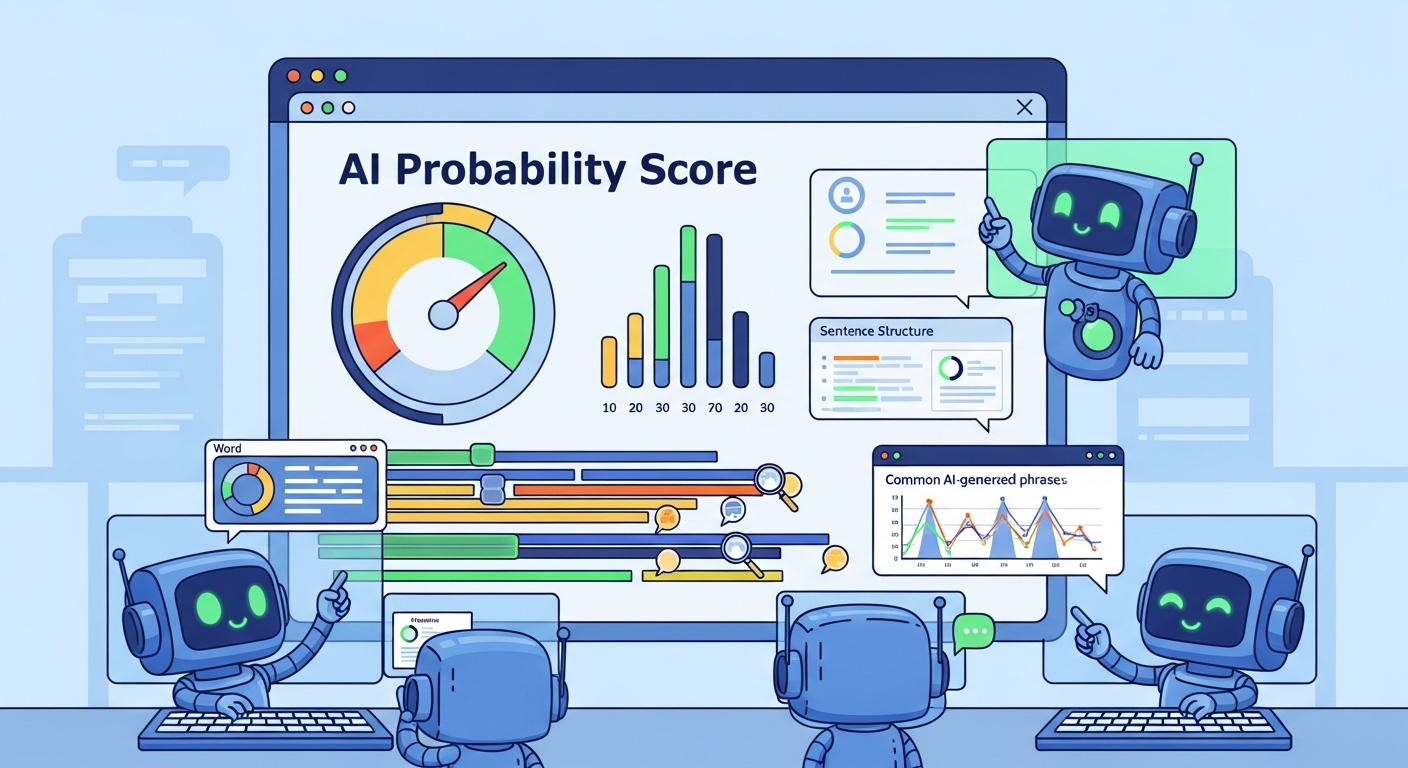
We run an AI detector at Detec AI, and we'll tell you this upfront: a detection score is a probability estimate, not proof of anything. If you've ever had your own honest writing flagged as "AI-generated," you're not crazy, you're not alone, and this article is for you.
What a false positive actually is
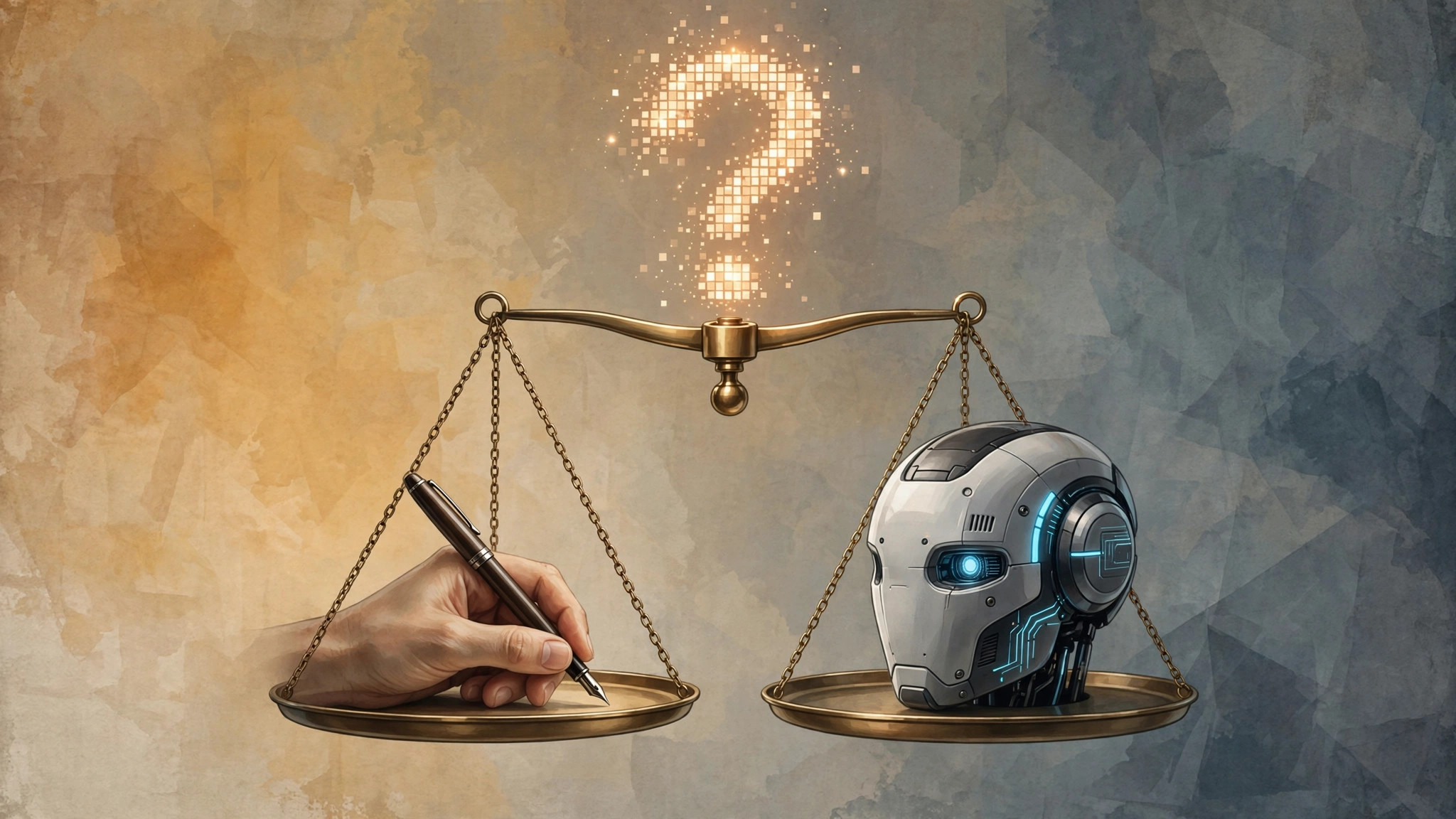
A false positive is when a detector says "this looks AI-generated" about text a human actually wrote.
A false negative is the reverse — AI-written text the detector misses.
Both happen. But false positives hurt more, because they accuse real people of something they didn't do. A student accused of cheating. A freelancer whose client refuses to pay. A job applicant silently rejected. The consequences are real, which is why this topic deserves honesty rather than marketing copy.

Why your human writing gets flagged
Remember from our guide to how AI detectors work that detectors measure predictability. The problem: plenty of legitimate human writing is predictable too. Here are the most common traps:
1. Formal and academic writing
Academic prose is trained to be objective, structured, and consistent — which is almost exactly what AI output looks like to a detector. Fixed terminology, balanced sentences, hedged claims ("it could be argued that…"). A well-written essay can read as "suspiciously smooth" to a machine.
2. Technical and legal documents
Specialized vocabulary plus standardized structure equals low variation. A software manual or a contract doesn't have room for quirky personal asides, so detectors see the uniformity and raise a flag.
3. Non-native English writing
This one stings. Writers working in a second language often use simpler, more consistent sentence structures — and grammar-correction tools on top of that. Multiple studies have found detectors disproportionately flag non-native English writing. It's one of the least fair failure modes in the whole field, and it's worth saying loudly.
4. Short text
A detector analyzing three sentences is like a doctor diagnosing from a single symptom. There's just not enough writing rhythm to measure. Short passages produce the wildest, least reliable scores.
5. Heavily edited drafts
Run your writing through a grammar checker, accept all the suggestions, smooth every sentence — and congratulations, you've made your human writing look more machine-like. Editing tools erase the little irregularities detectors use as "human" signals.
6. Translated text
Translation tools reshape sentence patterns. Even a beautiful original can come out the other side reading flat and uniform in English.

How often does this happen?
Honest answer: it depends on the text, the tool, and the length — and any vendor quoting you a single accuracy number is hiding the variance. Independent testing consistently shows that accuracy collapses on short samples, non-native writing, and heavily edited prose. The tools are best on long, natural, first-draft-style English prose, and worst exactly where the stakes are highest.
That's not a reason to never use detectors. It's a reason to never use them alone.
What to do if you're falsely accused
If a detector has flagged your writing and someone is holding it against you, here's a practical playbook:
- Stay calm and get specific. Ask exactly what was flagged and what score was produced. Vague accusations are easier to fight than specific ones — and specific ones can be examined.
- Show your process. Drafts, notes, outlines, revision history, browser history from your research — process evidence beats a percentage every time.
- Explain the writing. Offer to walk through your ideas, sources, and choices in conversation. Someone who wrote the piece can do this; someone who didn't, can't.
- Point out the tool's limits. Detectors themselves — including ours — state that results are probabilistic and require human review. Quote the tool's own documentation back at the accuser.
- Request a fair review process. A single automated score should never be the sole basis for a grade penalty, a rejected payment, or a disciplinary action. Ask for human review with full context.
What to do if you're the one reviewing
Maybe you're a teacher, an editor, or a hiring manager, and the detector just lit up red on someone's submission. Before you act:
- Test a longer sample from the same author, ideally something written in front of you.
- Compare against their known writing. Everyone has a voice. Does this match it?
- Look for the human signals detectors miss: specific anecdotes, strong opinions, idiosyncratic phrasing, genuine mistakes.
- Talk to the person. A five-minute conversation about the work reveals more than any score.
- Document everything beyond the score — what you considered, what the author said, what evidence you weighed.
Our homepage lays out a repeatable review process — analyze, read, verify, discuss — built for exactly this situation.
The bottom line
False positives aren't a rare glitch; they're a known, structural limitation of how detection works. The technology is genuinely useful as an initial signal — but the moment a score becomes a verdict without human review, someone innocent gets hurt.
Use detectors. Just don't outsource your judgment to them.
And if your own writing keeps getting flagged, the fix usually isn't to fight the detector — it's to write with more of you in it. Our guide to humanizing AI-assisted text covers the same techniques that make any writing read as unmistakably human.
Frequently asked questions
Why does an AI detector say my essay is AI when I wrote it myself? Formal, structured, or heavily edited writing shares patterns with AI output — uniform rhythm, predictable phrasing, hedged language. Non-native English and short samples make false flags more likely.
Can you dispute an AI detector result? Yes. Present your drafts, notes, and revision history; explain your process in conversation; and point to the detector's own stated limitations. No reputable tool claims its score is definitive proof.
Are some people flagged more often than others? Unfortunately, yes. Non-native English speakers and writers of formal or technical prose are disproportionately affected. Any fair review process must account for this.
How can I make my writing less likely to be flagged? Write longer passages, keep your natural rhythm (mix short and long sentences), include specific personal details and opinions, and don't over-smooth your prose with editing tools.